
 News
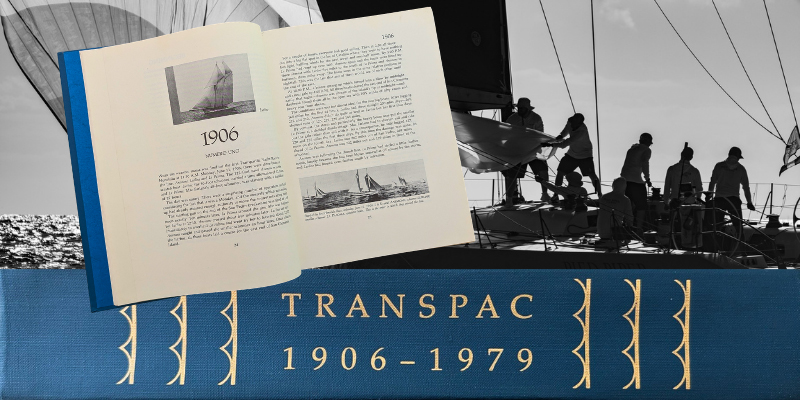
 If we can look back now to a milestone, classic Transpac—say 1973, introducing ultralights—and if we are able to dig into the details of other races too, it’s through the labors of one man: Jack Smock. Against the odds, Transpac has Smock’s authoritative history of the formative years.
 Jack was neither a big sailor, nor a big Transpac guy. He never sailed the race. He was, however, willing to take on a major piece of work in his retirement, at the behest of a friend and, like most things Transpac, pull it off as a volunteer, never counting the hours. And if someone/anyone has a photo of our author, please, please share it. (Not the other Jack Smock who pops up on a google search; sorry.)
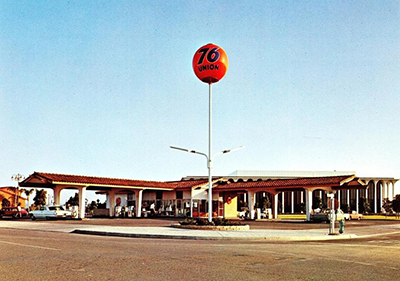
Smock was an advertising man. Our urban legends have it that he put Union Oil on the map as the first company to speak out about the role and responsibilities of business. Thanks to him—fact, not legend—a whole lot of 1950-60s automobiles cruised around America with little orange balls on their radio antennas. Every car used to have a radio antenna, son, and those “antenna toppers” now appear online as vintage collectibles. In the day, they provided free advertising for Union Oil stations that announced themselves full-sized.
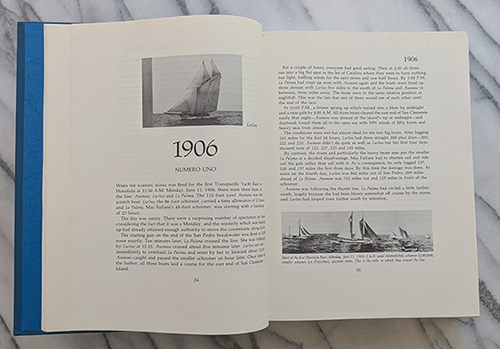
 From business offices on Wilshire Boulevard, Smock had retired to Newport Beach by the time Transpac YC Commodore Peter Davis commissioned a history book. Dick Steele came through with crucial support for publication, underpinning wider fundraising, and it was Steele who put Smock up to the task of writing. It’s likely that the result of four years and 720 pages worth of research and meticulous cross-checking exceeded anyone’s expectations in detail and scale. Smock’s history is not a page turner. It is encyclopedic. But the dramas are there, if you bring your imagination.
Who were the players who birthed the race in 1906? Present and accounted for. Whence a Transpacific Yacht Club? Something about Clarence MacFarlane, who had kicked off the race in 1906, suggesting to the 1928 committee that we needed a paper club to organize and perpetuate the race, with membership comprised of race veterans only. And the man at the helm to carry that vision forward was Al Soiland, serial founder of yachting institutions.
Those things are in the book, and the ultralight revolution, and every race and run-in and controversy and neck-and-neck duel until 1979. A few paperback updates followed, but along the way Smock lost his sight and could no longer skipper his trawler, Dundee. He died in 1988, age 79, leaving a legacy. For anyone who comes along now with an interest in the Transpac story, Jack’s book is it.
First-round work on the book fell partly upon daughters, and much of the book was dictated. Juli Smock Cook and Trisha Steele transcribed and proofread. The job advanced to new levels as Smock progressively lost his sight. “Jack loved the research,” Cook said. “It was a labor of love. He had a steel-trap mind. He knew every page of that book, but he never saw it. By then, he was blind.”

In simply lifting the book, however—5.3 pounds—Jack Smock could not have failed to “see” what he was giving to Transpac. In his preface, we find him confiding that he felt more confident of crew lists, working from press accounts pre-WWII, than later, too often forced to fall back on printed programs that were finalized before crew lists became final-final.
Now we’re digital. Celestial navigation is a specialty for those who have a yen. A wooden boat hauling the mail at the limits of hull speed down the final, ripping miles to Diamond Head is an exotic rarity.
And yet, one thing that Smock wrote about Transpac and the sailors of early days is just as true today: “The good Transpac crews all have…a dedication to race all the way, day or night, seasick or healthy, bone tired or rested, on watch or off.”
Thank you for the book, Jack.
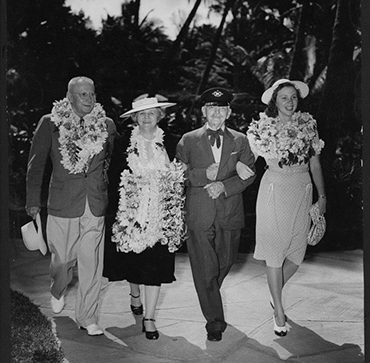
Clarence MacFarlane, in yachting hat, offers a Honolulu welcome
to Al Soiland, his wife Dagfine and their god daughter, Helen Ann