
 News
News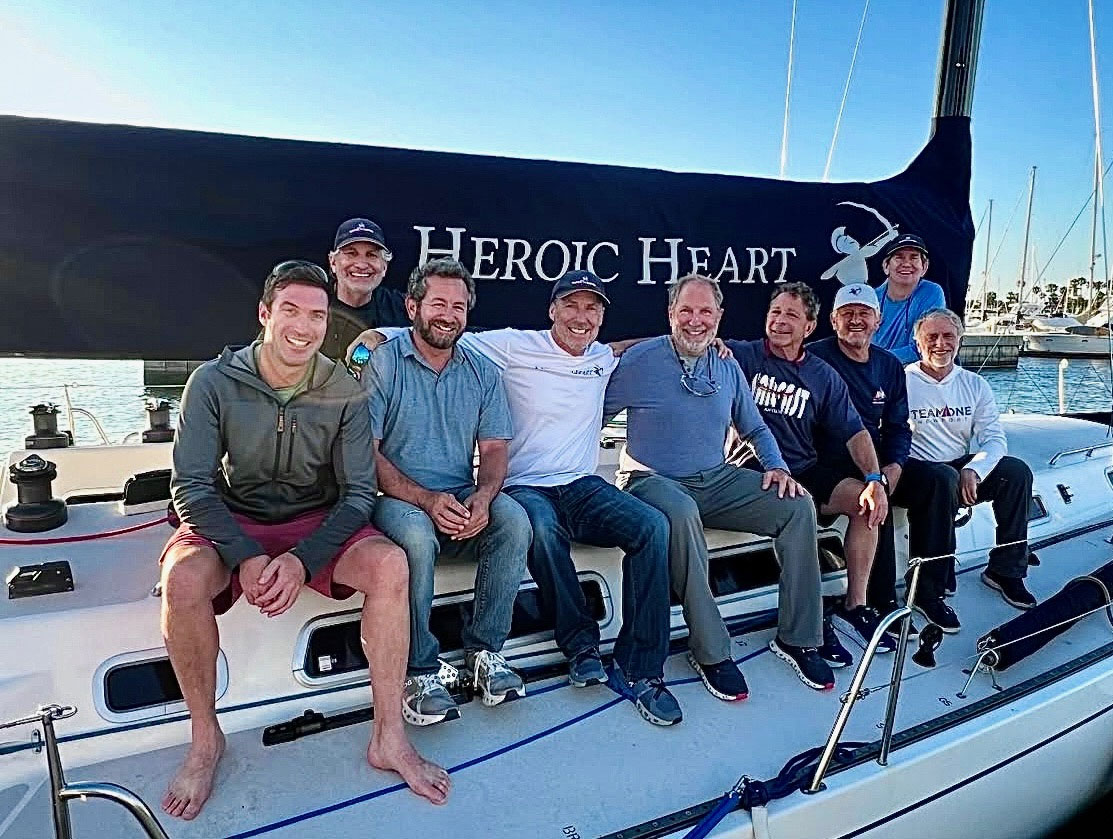
…for my purpose holds,
To sail beyond the sunset, and the baths
Of all the western stars, until I die.
Tho’ much is taken, much abides; and tho’
We are not now that strength which in old days
Moved earth and heaven, that which we are, we are;
One equal temper of heroic hearts,
Made weak by time and fate, but strong in will
To strive, to seek, to find, and not to yield
—Tennyson, from Ulysses
It’s 2 a.m. and we are downwind on the A1.5 spinnaker. Expedition just crashed, and I lost the last half-hour of my latest route analysis. Did I already grab the latest GRIB file from Saildocs or is that still the one from yesterday? The battery alarm is going off. 12.17 volts, time to run the engine. Again. Seems like it’s only been a few hours. Oh right, it was yesterday afternoon. I hear my name, and I’m summoned from outside the companionway. It’s time to set aside polars, strip charts, and the Balmar voltage regulator manual to handle the pole lift through another gybe. Just another stretch as the navigator on Transpac 2025.
How did I get here? What is this madness? Breakfast burritos—comfort food just a few days ago—and now all I seem to want are Fritos Corn Chips and electrolytes.
A little over a year and a half ago, Dan, Mike, and Steve approached me, “We’re doing Transpac next year. Come join us.” I had a nice life: work, dogs, ranching projects here and there. I had just taken up classical piano again. I wasn’t naïve. I’ve crossed oceans before. I know what it’s like out there. Another crossing sounded fun. I guess at the time I didn’t fully comprehend the commitment. Still, three of my absolute best friends invited me to share a project with them a year and a half away. I couldn’t say no.
So, onboard Tamsen, a 52-meter Perini Navi, on vacation in Cabo San Lucas, in December 2023, I curiously downloaded Expedition onto my Lenovo laptop, watched Stan Honey’s captivating presentation about navigating Transpac, and began to absorb the tools and language of offshore racing.
A couple of months later, a boat was purchased, a strategy prepared, and we started the long process of outfitting and readying ourselves for this adventure. We scheduled meetings every other week to discuss positions and sail change procedures. John experimented with the menu by preparing, freezing, and serving dinner at the meetings. Local races were cemented into the calendar. Who’s going to deliver the boat back from Ensenada? We enlisted the support of a local trainer and did workouts as a group. More burpees? Ugh! Together, we took yoga classes which were interesting, enjoyable, but exceedingly frustrating, as everything below my hips is as tight as a spinnaker tack line. I watched Stan’s video again. It didn’t take long for my “couldn’t say no” to become a “HELL YES”!
To appreciate how I got here, one must understand the backstory of how this came to be. Most sailors doing Transpac love sailing, right? I mean, LOVE sailing. I don’t blame or disparage them. I like sailing. A bunch. I think being out on the water is one of the most enjoyable, healthiest places to be. But to say I love it would be a stretch—maybe even disingenuous. I’m the kind of guy who’s happy to sit down with a voltage regulator manual and try to figure out why, in the real world, a 180-amp alternator only charges at a rate of 50 amp-hours. Which is to say—why, for me, the position as navigator aboard Heroic Heart is simply perfect.
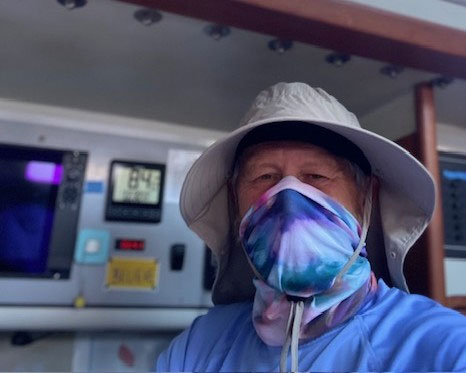
Yours truly, preparing to take a turn on the grinder
In November 1976, I was one of eleven teenagers who set out from Marina del Rey, California, on Vltava, an 85-foot staysail schooner, to sail around the world. Seven of them are with me now, headed for Hawaii. It’s day nine onboard Heroic Heart, a Santa Cruz 52 sled. So far, we’ve crawled on our hands and knees through the Channel Island eddies begging for a wisp of a breeze, glided headfirst into the light and variable winds of an upper-level low where we got bogged down for two days, rode the notorious slot car and are currently on the downhill run headed directly for Molokai Channel. Absent are the four Vltava crewmembers who continue to cheer us on from their homes in Santa Barbara, California.
Our story, by and large, is not so much about winning a trophy. Rather, it’s about the friendships established during those early years and throughout that original voyage, and the lasting influence it has had on our current quest. It’s about honoring the sea, our shared past, and the unbreakable bonds forged on a creaky old schooner half a century ago. That we’ve remained close friends throughout is a testament to our mentors, our early influences, and the lives we’ve managed to forge.
Our families connected in various ways, but the common thread was through Steve and Dan’s dad, Robert Firestone. To us, even his own kids, he was always Bob. My dad had been friends with him since they were teens growing up in Brooklyn.
Andy, Ron, and John were Bob’s neighbors in West L.A. where he used to join the kids after work having a catch or playing stickball in the street. Mike and Gil were introduced through associates of Bob’s with whom he shared a suite of offices.
Sam joined our clan, first as paid crew in New Zealand, and subsequently as a friend some sixteen years ago.
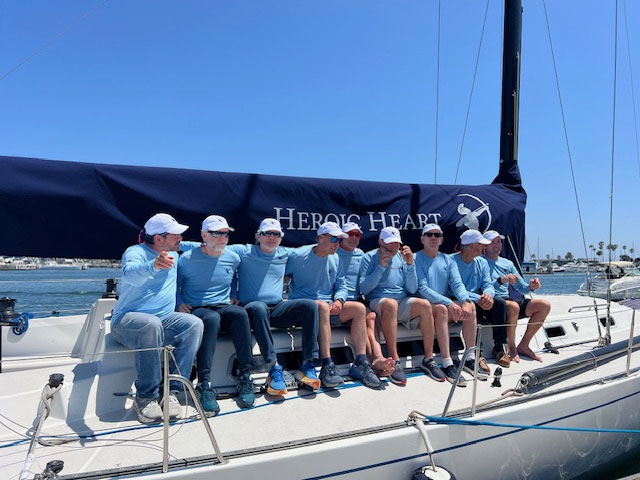
Heroic Heart’s Crew in Long Beach, about to embark on Transpac 2025
From left: John, Gil, Ron, Steve, Mike, Dan, Andy, Bobby and Sam
Early in our high-school years, our parents became concerned with our behavior. It alarmed them that we had started to become distant–aloof and rebellious. They didn’t know how to approach us and felt helpless to intervene. It was Bob’s idea to talk to us and approach us on an equal footing. Why would we choose to behave in such a disagreeable manner? One of the other parents volunteered to lead the discussion because he had established a rapport with many of us and seemed to relate to us better than most of the other parents. The idea was not to lecture us, but to give us a voice. Whereas kids are often ignored, this gave us the opportunity to express the frustrations that resulted in our poor behavior.
The talks gave our generation a forum to expose and confront many of the issues that we—and frankly most teenagers—struggled with. No topic was out of bounds. We had opinions about everything: mostly hating school, anger at parents, others’ annoying behavior, competition for girls, friends, school, life, love and even sex. The discussions were so successful they continued regularly for much of the time leading up to—and even throughout—Vltava’s historic voyage. Trust was formed and friendships emerged among us as well as with many of the other adults.
Team Heroic Heart puts all those tenets together. We may not be the savviest when it comes to racing tactics, the best way to douse a spinnaker or untangle a halyard, but we communicate. Egos and toxic personalities are absent. There are no prima donnas. Conflicts are bound to arise in a project of this magnitude, and we resolve them good-naturedly, without the drama or strong words that inevitably arise when things heat up. If someone is going through a tough time, they have eight others to confide in, from Captain on down to this lowly navigator.
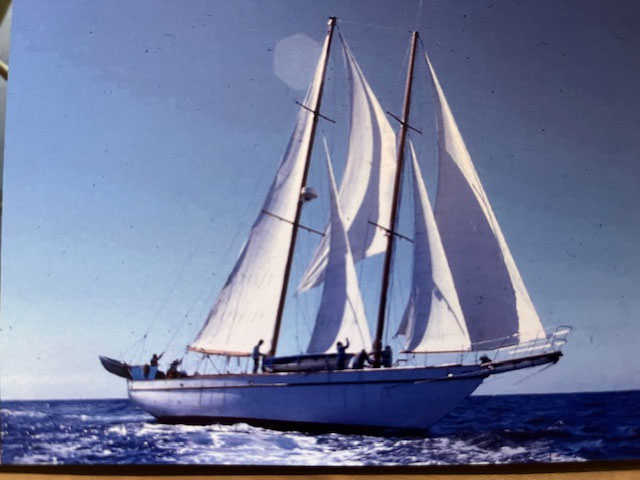
Vltava under full sail, circa 1980
We acquired Vltava in early 1973 when Lou, one of the parents, became enamored with the idea of living onboard a boat in the Marina. He invited Bob to inspect the vessel with him in Long Beach harbor. It was not a good match for Lou, but Bob saw the potential of sharing an ambitious project, young and old alike. If we wanted to do big things, we needed a vessel around which to coalesce (pun intended).
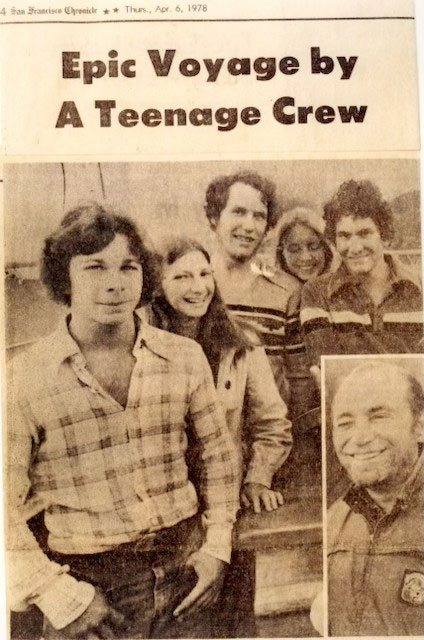 A work in progress when she was acquired, Vltava was rough, unfinished and a marine disaster waiting to happen. In short, nothing like the Santa Cruz 52 upon which we are now screaming along at 13 knots. Although some in the group had experience with small powerboats, few had sailed before. Still, my peers and I became infatuated with the project. No longer having time to be insolent, we worked on it day and night, after school and on weekends. Friday afternoons were for training. We slowly expanded our boundaries, first in trips to the Channel Islands: Santa Cruz, Catalina, and the others, then on to San Francisco, a trip halfway down the Baja Peninsula and eventually Cabo San Lucas where the seed of the eventual circumnavigation was planted.
We first sailed to Hawaii in the summer of 1975. The trip was delightful and, by all measures, a resounding success. The reckless idea of buying a rusty old boat established lives at sea for us all. We’ve since cruised hundreds of thousands of miles—from the South Pacific to the Caribbean, Europe, Africa, and Southeast Asia.
We navigated by sextant, a process I learned through books and an after-school class generously offered by a high-school teacher. Onboard Heroic Heart, we don’t even carry a sextant. Back then, noon sights and dawn/dusk star shots marked our progress across well-worn paper charts. Incidentally, I can still reduce a celestial sight within a reasonable amount of time. With Expedition and Heroic Heart’s B&G and Garmin network, there’s now an instantaneously overwhelming amount of information to process. I spend a significant amount of time downloading GRIB files, optimizing routes, and tweaking polars.
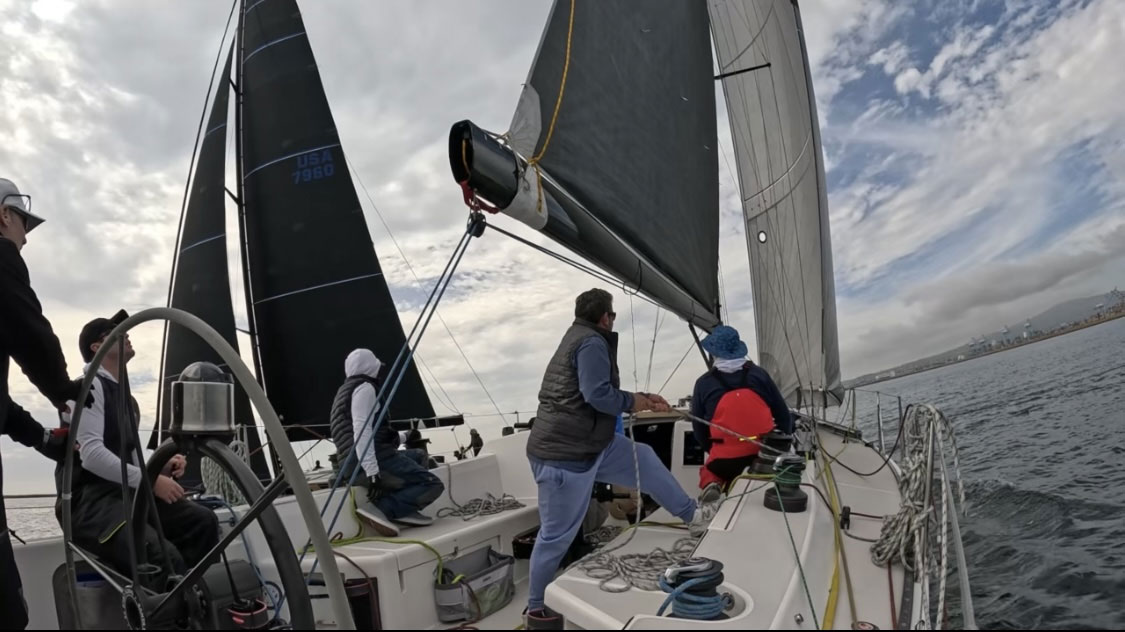
Start of the Around Catalina Race, February 2025
Back in the day, one of our physician friends taught us basic first aid: how to give injections, start an IV and deal with situations such as hypothermia and dehydration. Ron, Andy, and I recently brushed up our skills by taking Red Cross first aid courses. Ron spent countless hours putting together a comprehensive first aid kit. As required, we all took the safety at sea courses.
For our first Hawaii crossing, we pre-cooked and froze all our meals and stored them with dry ice. Some things never change. Throughout this voyage, we’ve dined on fine meals, lovingly prepared and frozen by our benefactors back home. There has not been one disappointment.
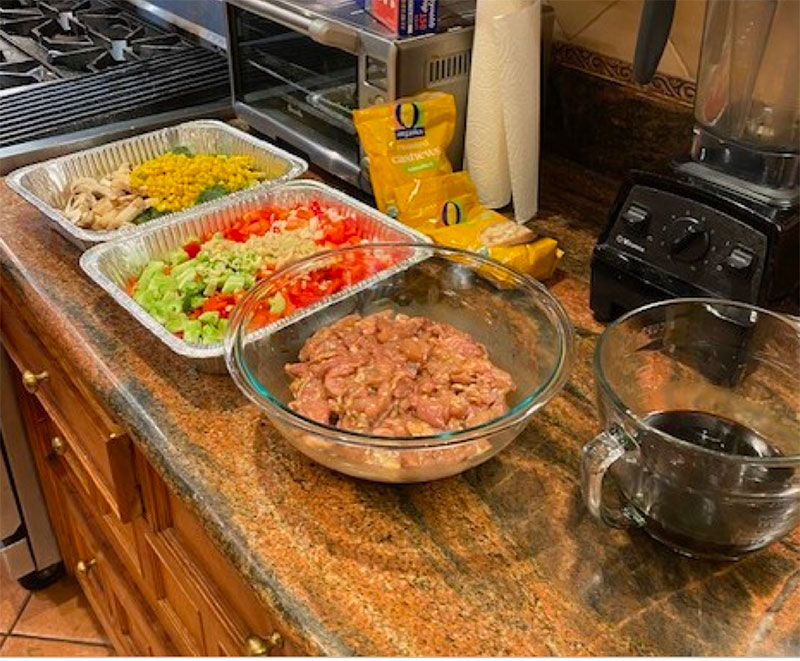
Homemade cashew chicken was devoured on day 10
Like nearly every other Transpac entrant, Heroic Heart communicates over Starlink. It’s better than my broadband Internet at home. On Vltava, we kept in touch back home on ham radio. I earned my long-expired WA6PYV license transcribing morse code at a blistering rate of 16 words per minute. Weather information was derived from pilot charts and silvery synoptic weather faxes that smelled like flickering electrical relays.
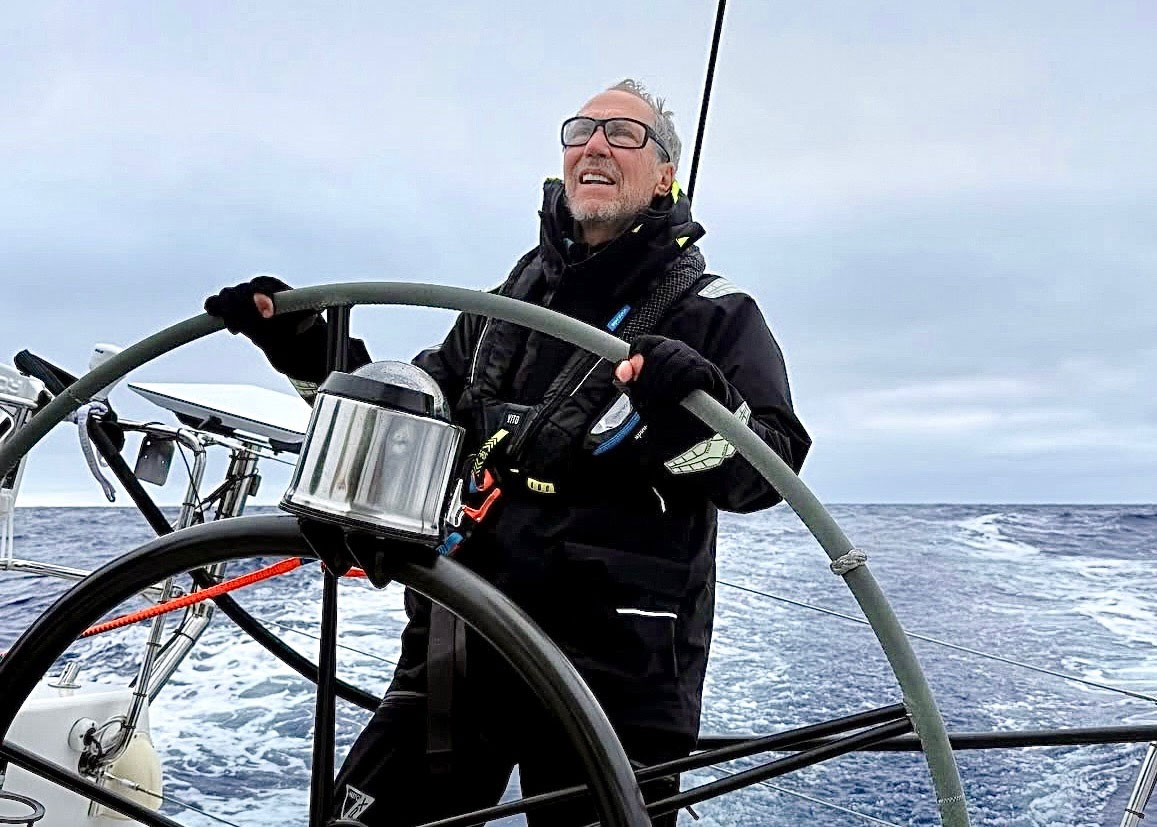
Captain Steve at the helm, a task requiring immense concentration
If anything, Vltava taught us caution, vigilance, and uncompromised safety. Some of our early discussions focused on everyone’s boat-handling skills, reactions to emergencies, and concern for the safety and well-being of each crew member. We have had no major mishaps at sea and intended to keep it that way on Heroic Heart. For example, when lofting Sam on the spinnaker halyard to inspect the rigging, Ron diligently tends the jib halyard as a backup. We almost certainly carry more spares than other competitors. The extra weight is a calculated trade-off.
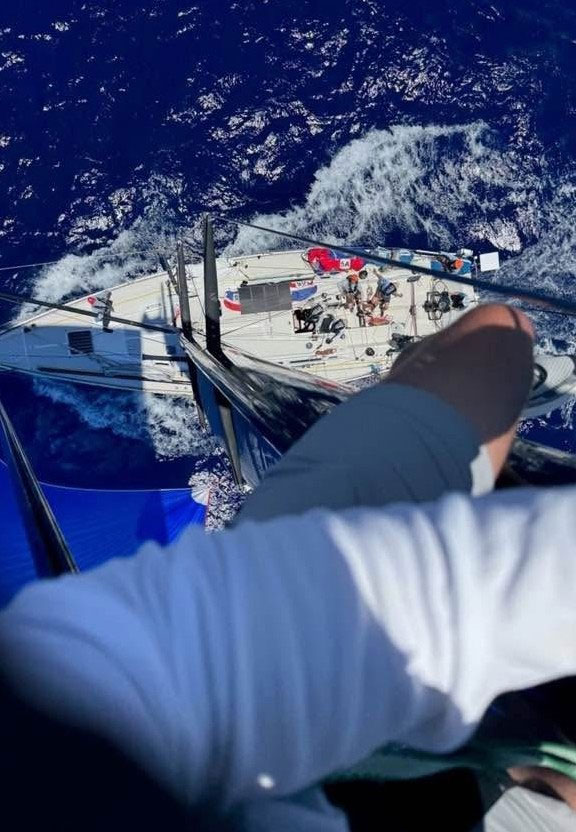
From top-to-bottom, Sam, checks the rigging underway.
We chose the name Heroic Heart as a tribute to the tenacity with which we search for truths in our lives. The poem is about Ulysses and the pursuit of goals, regardless of where they might lead. Over the course of this project, the passage has taken on a slightly different meaning—for what started nearly 50 years ago has continued unabated. However, we remain “…weak by time and fate, but strong in will.”
A serious shoutout for everyone we consider part of the team including: Bill Guilfoyle, Patrick O’Brian, Bruce Cooper, Chris Bedford, Steve Politis, Lucas Rascon, Richard MacLaughlin and others. Their wisdom has been immense, and we couldn’t have done it without them.
Coming full circle, Bob Firestone passed away in September 2024. He was a father to some, a friend, mentor and inspiration to all. His wisdom, strength, compassion, and sense of adventure ignited our own passions. He knew of our quest to sail Transpac but unfortunately was unable to see it to fruition. We honor him and I know he would’ve been proud. This voyage is dedicated to his memory, and to an absent heroic heart.
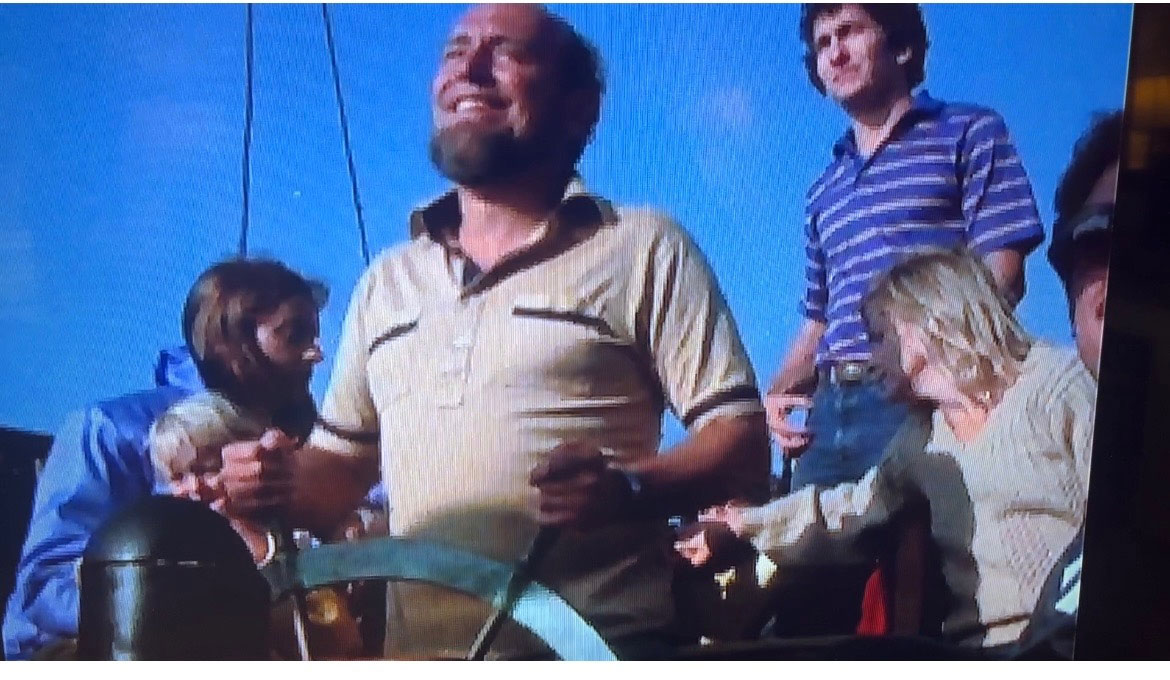 Robert W. Firestone (1931-2024)