 News
HANDICAPPING FOR THE BEST SAILED, BEST PREPARED BOATS
Transpac's ongoing review of F-TCF ratings
Aloha! Competitors in the Transpac Race have always ranged in boat size and inherent speed, with overall results calculated on “corrected time” by a handicapping system. TPYC’s history of developing custom handicaps for the race dates back over 50 years and continues Transpac’s goal of fairness for the various boat types, sizes and speeds so the winners are the best sailed, best prepared boats. In 2025, this led Transpac to adopt Forecast Time Correction Factor (F-TCF) scoring to better incorporate the most likely weather for each race, as well as each boat’s measured performance characteristics.
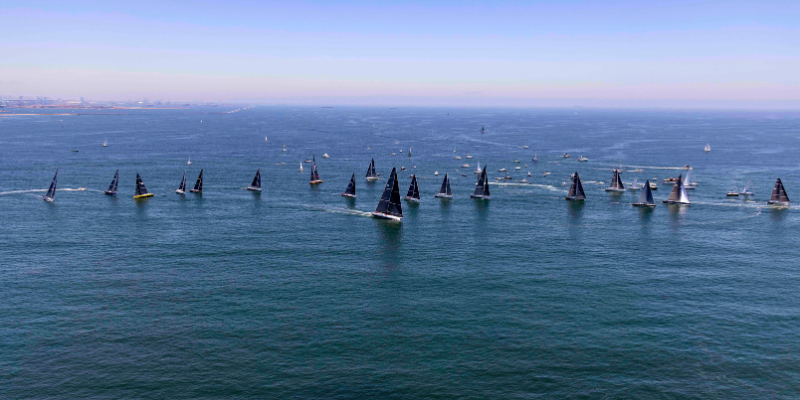
Decades ago, Transpac customized handicaps by modifying the IOR rule handicaps, which were based on buoys and all-points-of-sail coastal racing, to suit the largely downwind Transpac. Then, with the advent of Velocity Prediction Program (VPP) based rules, which calculate each boat’s performance across the spectrum of wind speeds and wind angles, race organizers had to supply the other part of the rating—the wind speeds and directions the boats would likely encounter. Initially, the matrix was compiled from competitors’ written logs and refined over time. With the advent of optimal routing software and historical digital weather files, a TPYC study “raced” nine representative boats through seven Transpac Races (and three start days per race) along their “optimal routes” to calculate an updated matrix of the fleet average miles at each wind speed and direction.
Of course, no race is average. Conditions near the start can vary from a strong WNW breeze that brings the fleet quickly out to the northerly synoptic wind, to a light SSE Catalina Eddy flow that takes boats two or three times longer to reach the synoptic breeze. Later in the race, the building and easing of the trades affects the fleet differently—and the different boats within that fleet. Advances in optimal routing software and weather forecasting allow each boat’s predicted elapsed time to be calculated on the morning of the start. That time, divided by the “scratch boat’s” predicted elapsed time, is each boat’s Forecast Time Correction Factor, or F-TCF. At the end of the race, each boat’s corrected finish time is their actual elapsed time multiplied by this F-TCF.
F-TCF handicapping was adopted by the 2024 and 2026 Newport Bermuda Race, the 2025 Transpac and the 2026 Pacific Cup. The races saw improved agreement between the predicted elapsed times and their fleets’ actual elapsed times, compared to previous wind matrix or Performance Curve Scoring (PCS) systems. This indicates F-TCF better represents actual race conditions with the potential for fairer scoring.
It isn’t perfect though. Operational and software errors were identified in the Newport Bermuda Race this June, with remedies incorporated prior to the Pacific Cup in July. The specific weather files, routing software version, software settings and polars were published prior to Pacific Cup, which allowed competitors to duplicate F-TCF optimal elapsed time calculations. For the first time, polars with the performance enhancements of the Pacific Swell Factor were available to competitors following an ORR policy change to release this previously unpublished data.
In recent months, Pacific Cup, Newport Bermuda and Transpac race organizers, US Sailing Offshore Office and top navigators have been in contact, sharing what they’ve learned, what’s gone right, and what needs improvement so that race handicapping can continue to evolve and improve. As we head into the 2027 race, Transpac’s Technical Committee, chaired by Brad Wheeler, is working with other actively-racing TPYC Directors to review F-TCF with the goal of improved handicapping for our competitors.
Items in this review include:
Transpac’s Technical Committee will have a busy few months before presenting their recommendations to the Board, but our goal is clear: improve handicapping to reward all competitors fairly for their preparation and fast sailing.
REPLAY >>> RACE RIGGING WITH SD BOATWORKS
Watch the Transpac Prep Seminar with David Servais of SD Boatworks
On July 17, Transpac hosted a seminar with industry expert and Transpac sponsor SD Boatworks, covering rigging issues and ideas to consider as you prepare for the 2027 race. Is your current rigging set up adequate? What new products and technologies are available today? What’s being used by top level race boats? David Servais of SD Boatworks covered topics such as the latest concepts for offshore race rigging, soft shackles and more; lifespan and inspection schedules for running and standing rigging; how many spare sheets, halyards and fittings is enough; and checking for and dealing with chafing.
IN IT TO WIN IT
Kimo Winterbottom’s obsession is to win Transpac. Safely.
Kimo Winterbottom has sailed all his life—at times at the highest levels of the sport. Olympic trials in the Soling, three times in the J/24 Worlds, racing the Maxi circuit in the Mediterranean, the Caribbean, Australia and San Francisco Bay. But it wasn’t until his father passed away in 2023 that his compass needle pointed offshore.
“Frankly, I was terrified of bluewater sailing when I was growing up,” he says. But his dad was really into it, crossing the Pacific 15 times in various campaigns. His father’s passing inspired Winterbottom to buy an Andrews 56 and sign up for his first offshore race—the 2024 Pac Cup. As Halawa crossed the finish line, he and his brothers, Michael and Jesse Winterbottom, spread their father’s ashes in a tribute to the legacy of bluewater sailing he’d newly inspired in them.
In what his dad may find an even more fitting tribute: “I now have an obsession to win Transpac,” says Winterbottom. After two Pac Cups and the 2025 Transpac, as he looks ahead to the 2027 race, his goal is clear: “I’m looking to win.”
What he’s learned is that at this level of offshore racing, cutting corners on the prep is not a winning strategy. “I discovered that ocean racing is a game of preparation. The more prepared boats have a tendency to perform better out on the open ocean. Safety is super important, which is why we have AIS transmitters and Spinlock PFDs for all the crew. We spend a lot of time talking about how we’re going to improve our performance in the Pac Cup and Transpac and other races. We’ve done everything from putting a new keel on the boat, new sails, new mast….You name it, we’ve done it in an effort to get lighter and faster.”
But that intense focus on improvements and performance can fall apart quickly without a proper insurance policy—something that has kept many skippers with bluewater dreams stuck at anchor. Finding adequate coverage has stymied Winterbottom, so he’s combined his sailing experiences with his 40 years of expertise in the insurance industry to create a new insurance product for sailors.
“We want to insure the boats that are better prepared with people who have resumés that reflect that preparation. These are safe risks over the years,” he says of Transpac competitors who fit the bill for policies underwritten by Bridger Marine Insurance, where Winterbottom is CEO. “I don’t think there are many CEOs that do what I do, so I decided that I could meet a need amongst my constituency.”
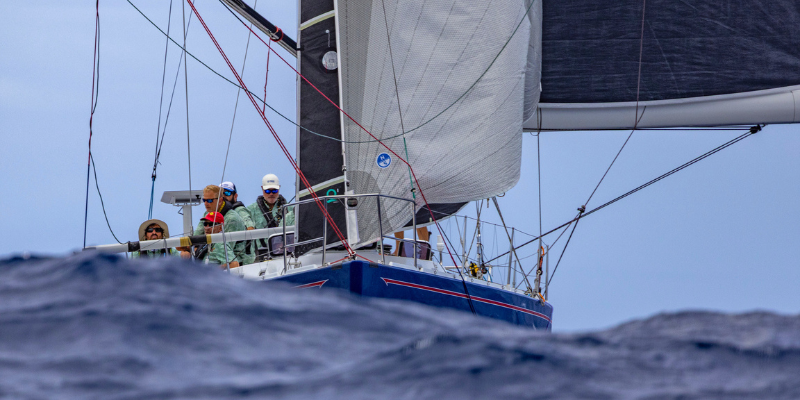
His development of an offshore insurance product was inspired by his own frustrations with fickle, inadequate coverage and his time offshore where unpredictability reigns. For example, he hit a whale on the way to Hawaii this year. The whale and Halawa both survived the encounter, but those are the types of unplanned events that insurance should cover when one ventures beyond the breakwater.
“We spent a tremendous amount of time constructing our policy form, engaging legal counsel, digging into our own experiences to make sure we had a policy form that we could be proud of and that responds to the needs of sailors,” he says.
What’s missing from most boat insurance policies? Mast coverage, international coverage if you wander beyond the territorial waters of the United States or cross the border in a race to Ensenada or Cabo.
“California Race Week will take you more than 12 miles offshore into international waters—these are the things we cover,” he points out. “Bridger Marine provides mast coverage of 50% of agreed value and subject to a rigging survey, and up to $1 million of liability coverage. We do not exclude any offshore races regardless of the length or position in international waters.”
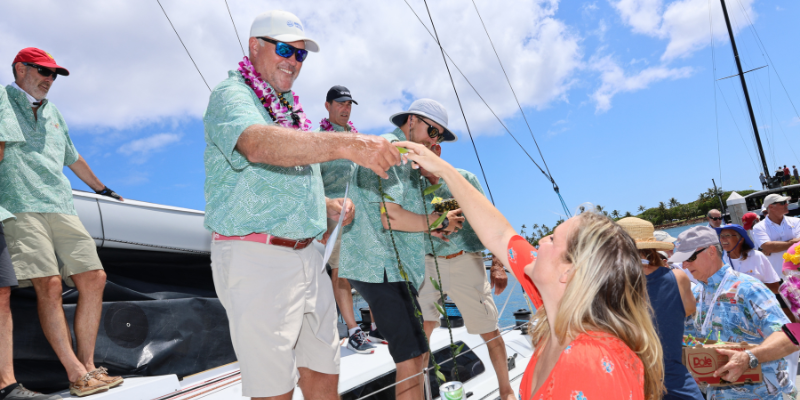
Halawa is currently berthed at Waikiki Yacht Club while Winterbottom makes plans to compete in the 2026 Lahaina Return Race, and he’s locking in his 2027 Transpac crew, including navigator Mark D’Arcy, engineer Conrad Holbrook, his brothers Michael and Jesse Winterbottom, and David Rogers and his wife Taylor Joosten. “We’re a Corinthian program, no pros on the boat and I’m proud of that and we’ll continue that.” Corinthian doesn’t mean they don’t take the game seriously and try to elevate everyone’s skills to the highest levels.
“If your crew members on your boat haven’t taken Safety at Sea, I’d strongly urge you to do that regardless of whether Transpac requires it of every competitor on the boat. It’s just good practice and it’s a good investment of your time and your crew. If you think you’re prepared for the worst things that could happen on the boat, ask yourself: Do you know exactly where your life raft is?”
“Invest some time and money in safety. You’re your best insurance policy.”
LEARN MORE ABOUT BRIDGER MARINE INSURANCE >>
UPCOMING SEMINAR ON BOAT INSURANCE
Stay tuned for an announcement about an upcoming informational seminar with Bridger Marine, covering the issues to consider before heading offshore and the insurance products that might be available for you and your vessel.
SPONSOR THE 2027 TRANSPAC
You don't have to race across an ocean to be part of the race!
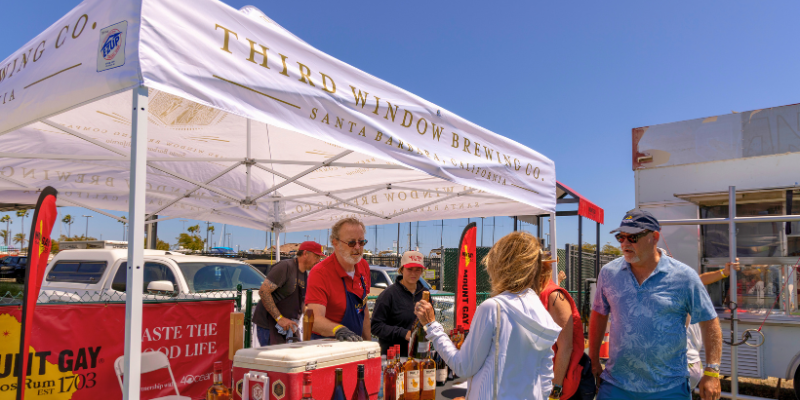
Want to be a part of one of the world’s greatest ocean races without leaving the dock? Sponsorship opportunities are available for the 53rd edition of the Transpac. From supporting the socials and shoreside logistics to aligning your marine brand with over a million online followers and hundreds of sailors and bluewater boats embarking on this 2,225-mile race of a lifetime, there are several bespoke options available.
To learn more, contact TPYC Jr. Staff Commodore Bill Guilfoyle at wguilfoyle3603@gmail.com or 805-729-3666.
TRANSPAC CHECKLIST: SAFETY AT SEA TRAINING
Complete a Transpac requirement
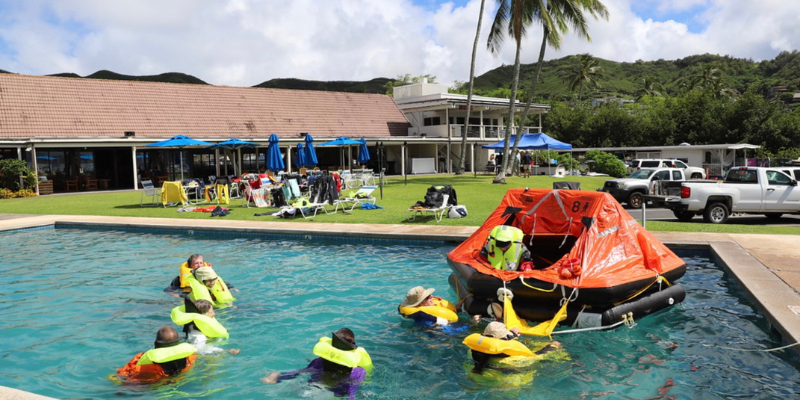
One of several Transpac race requirements is valid Safety at Sea training certificates for at least 60% of the crew, including the Person in Charge, Reserve Person in Charge and Watch Captains. US Sailing maintains a database of upcoming Safety at Sea courses around the country—find one near you and tick something off your Transpac prep checklist.
LET US KNOW YOU'RE OUT THERE
Follow @transpacrace on social media and tag us in your posts
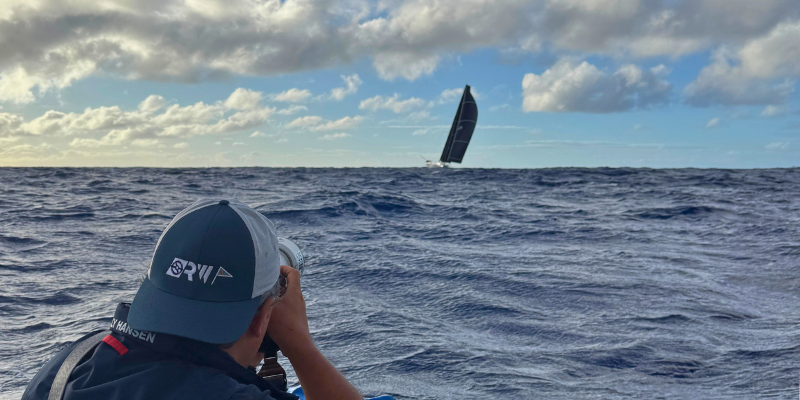
Let us know you're out there and preparing for Transpac 2027! If you’re on social media, tag @transpacrace in your posts so we can follow your journey to the starting line and share your posts with other sailors and fans. You're also welcome to email your photos, social media handles and website info to media@transpacyc.com so we can collaborate!
REGISTER NOW FOR THE 2027 TRANSPAC
Entries are open and boats are prepping now!
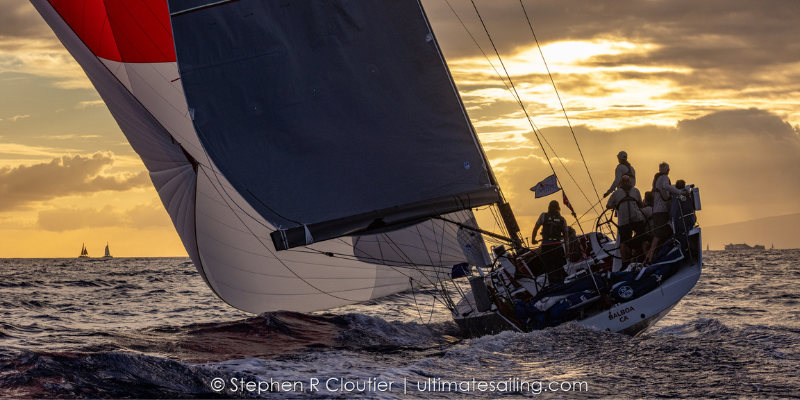
Entries are open for the 2027 Transpac and 20 boats have registered to date. If you’re a returning skipper or sailor, use your existing Nautical Cloud account to sign in and sign up! If you’re new to Transpac, welcome aboard—create an account, add your basic boat details and officially enter the race with payment of the $250 deposit. The Entry Committee is available for assistance at entry@transpacyc.com.
Leading up to the race, owners can navigate through the Nautical Cloud platform, completing the task list to meet all entry requirements. Have your crew create accounts, too, and you can add them to your boat roster and assign roles, such as Captain and Person in Charge, which gives them access to assist with the entry process.
KEY INFO FOR THE 2027 TRANSPAC
Skippers, take note
Three starts are planned for competitors: July 6, July 8 and July 10, 2027. This schedule results in boats starting on different days crossing in the middle of the race. It brings the finishes of fast and slow boats closer together so all can celebrate dockside and aligns well for the Honolulu team who staff the finish line, greet the boats, handle post-race inspections and state clearance and host the parties. With a July 18 full moon, competitors can enjoy a gradual increase of moonlight each night for the bulk of their time racing offshore.
The ORR (Offshore Racing Rule) will be used to handicap monohulls competing for the traditional King Kalakaua Trophy and other monohull perpetuals. ORR-MH will be used to handicap multihulls.
New for Transpac 2027: an Open Monohull Division for monohulls with more vertical lift than ORR allows, up to fully foiling, provided they meet the other monohull requirements, such as US Sailing’s SER stability and construction requirements. Open Monohulls are eligible for the Barn Door, fastest monohull elapsed time and monohull course record trophies.
IMPORTANT DATES FOR TRANSPAC 2027
Mark your calendars and make your plans